Onyinyechi Shares the System That Helps Nervous Speakers Get Through Presentations, Toasts, and Meetings Without Falling Apart
If your heart starts racing the moment someone says "say a few words," if you've rehearsed a two-minute update in the mirror for an hour and still blanked halfway through, or if you've turned down a toast, a presentation, or a chance to speak because the thought of standing in front of people made your stomach drop — this is for you.
You've probably tried the usual advice already.
"Just imagine everyone in their underwear." It doesn't help. You still feel exposed.
"Practice makes perfect." You practiced — alone, in your room, where nobody was watching. The moment real eyes were on you, it fell apart anyway.
"Just be confident." As if confidence is a switch you can flip.
So you keep doing what you've always done. You let someone else give the toast. You let a colleague take the presentation. You say "I'm just not a public speaker" so often you've started to believe it's a permanent fact about you, instead of a skill nobody ever actually taught you.
Here's the part that's easy to miss: it isn't really about the speech itself.
It's about every opportunity that quietly passed you by because you didn't put your hand up. The promotion that went to someone less prepared, but more willing to speak. The toast you wished you'd given. The good idea you kept to yourself in the meeting because your voice would have shaken.
That's the real cost — not the sweaty palms, but what the fear quietly takes from you, one avoided opportunity at a time.
Because I want to share the system that changed how I prepare for every talk, toast, and meeting I have to give.
Confident speakers aren't a different species. Almost every one of them built that confidence deliberately — one uncomfortable rehearsal, one imperfect talk, one small win at a time.
My name is Onyinyechi.
First thing you should know: I'm not a psychologist and I'm not a professional speaking coach with a certificate on the wall. I'm a communicator and educator who has spent years helping people move from dreading the microphone to actually wanting it — through practice, structure, and a handful of techniques that consistently work.
Why I Built This Guide
I've had this anxiety for as long as I can remember. Growing up, the thought of speaking in front of a group made my stomach turn — and it didn't go away with age. It followed me all the way to university.
Class presentations were the worst of it. I'd know the material cold, sit through the whole lecture calmly, and then the moment it was my turn to stand up and speak, everything I knew seemed to disappear. My voice would shake. My mind would go blank. I'd sit back down feeling like I'd failed at something everyone else found easy.
At some point I got tired of just living with it. I started talking myself through it, and then I started actually researching it — reading everything I could find on why this happens and what genuinely helps, not just the generic "relax and be yourself" advice that never worked for me.
Piece by piece, I put together an approach that actually changed things: how to turn that fear into something closer to confidence, how to manage my nerves instead of being ambushed by them, how to build a genuinely confident mindset instead of faking one, daily habits that built that confidence over time, and — the piece that changed the most — learning to actually understand my audience instead of just worrying about myself the whole time.
None of it happened overnight. But it worked. And once I saw it working for me, I wanted to put it into something other people dealing with the same thing could actually use.
That's what Find Your Voice is: the system I built for myself, written out step by step, so you don't have to spend years figuring it out the way I did.
I put everything — the fear-management techniques, the confidence-building habits, the speech structure, the delivery skills, the templates — into one guide, written in plain language.
Introducing…
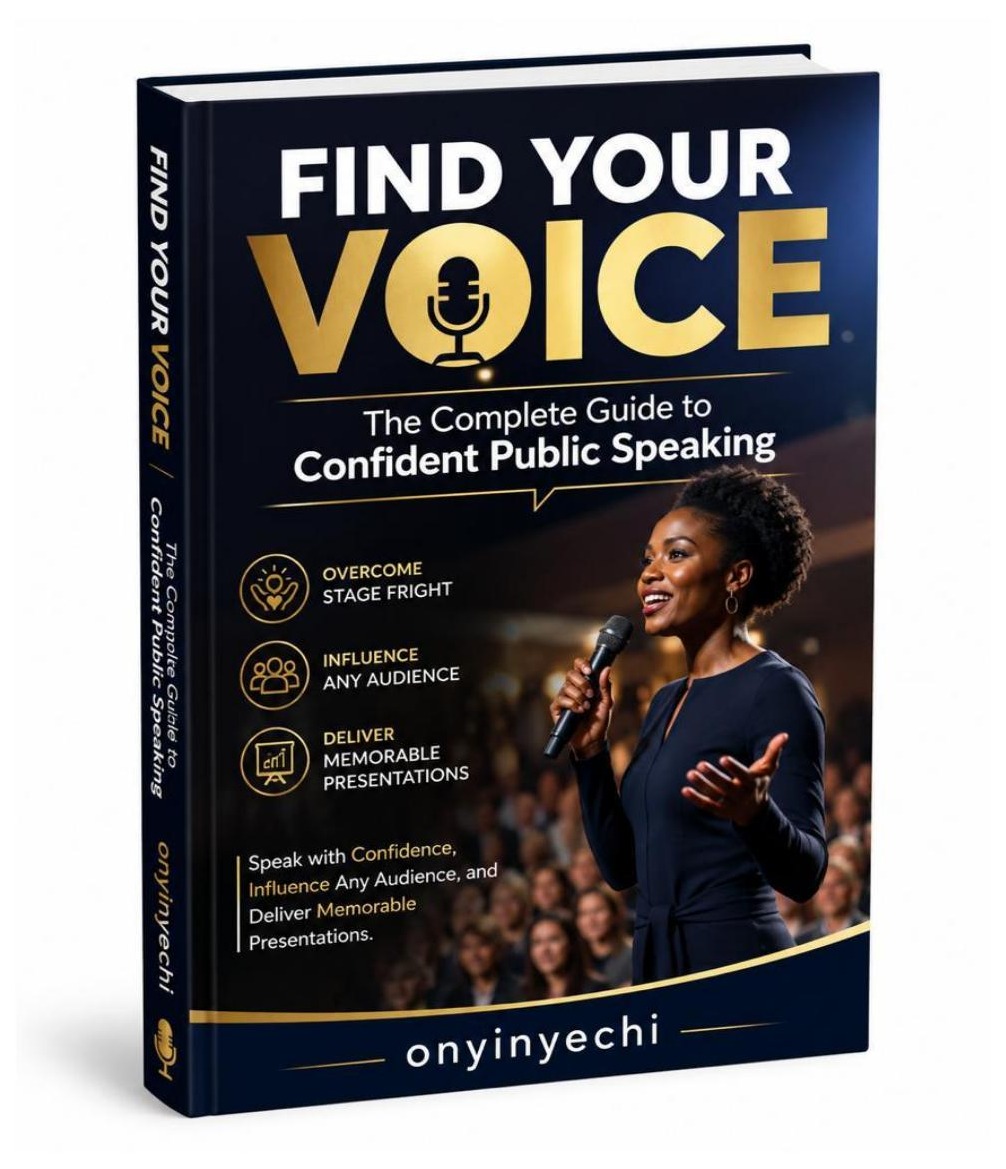
Find Your Voice
Inside This Guide, You'll Discover:
- Where stage fright actually comes from — and a simple breathing technique to manage it before you speak.
- The real difference between confidence and arrogance — and the daily habits that build genuine self-trust over time.
- How to research your audience and topic — so your material actually lands instead of missing the room.
- A clear introduction–body–conclusion framework — usable for almost any speaking situation, from a toast to a keynote.
- How to use your voice, pacing, and body language — so people remember what you said, not just that you said it.
- The PREP method — a simple structure for impromptu speaking when you're caught off guard.
- 5 ready-to-use speech templates — informative, persuasive, motivational, business, and toast frameworks.
- A 30-day daily practice challenge — to build the skill in short, manageable sessions.
And the best part? You don't need a coach, a course, or years of experience. It's the same structure I teach in person, written so you can start applying it tonight.
What Readers Say
How Much Does This Guide Cost?
Putting this together took real work — structuring six chapters around what actually helps with speaking anxiety, building the templates and 30-day challenge, and writing it in plain language rather than jargon.
I priced it to be accessible, not exclusive. This isn't a ₦50,000 coaching program — it's a guide for anyone serious about getting past their fear of speaking.
What Comes With It
Bonus 1: 5 Ready-to-Use Speech Templates — informative, persuasive, motivational, business, and toast/special-occasion frameworks you can adapt immediately.
Bonus 2: The 30-Day Public Speaking Challenge — a structured, day-by-day practice plan to build the skill in short daily sessions.
Bonus 3: The Master Public Speaking Checklist — a before-you-write, before-you-practice, before-you-present run-through for any talk.
Bonus 4: Quick Reference — Top 10 Mistakes to Avoid — the fastest way to spot what's holding your delivery back.
Everything You're Getting
- ✓ Find Your Voice — full 6-chapter guide
- ✓ 5 Ready-to-Use Speech Templates
- ✓ The 30-Day Public Speaking Challenge
- ✓ The Master Public Speaking Checklist
- ✓ Quick Reference: Top 10 Mistakes to Avoid
Still Feeling Unsure?
30-Day Money-Back Guarantee
If you work through the guide and the 30-day challenge and feel it hasn't helped you, contact me within 30 days of purchase for a full refund — no long explanation required.
Right Now, You Have Two Choices
- The next time you're asked to speak, the same fear shows up.
- You keep letting other people take the opportunities you actually want.
- You keep telling yourself "I'm just not a speaker."
- Nothing about how you prepare or deliver changes.
- You have a clear system for managing nerves before you speak.
- You have templates ready for the next toast, pitch, or presentation.
- You have a 30-day plan to build the skill in daily sessions.
- Speaking opportunities become something to prepare for, not dread.
Frequently Asked Questions
How is the guide delivered?
As soon as your payment is confirmed, the PDF is sent to your email. You can also request delivery via WhatsApp.
Do I need any prior speaking experience?
No — the guide is written in plain language for complete beginners, and is also useful for people who already speak occasionally and want to improve.
What format is it in?
A digital PDF, formatted to read easily on a phone, tablet, or computer.
What if I'm not happy with it?
You're covered by the 30-day money-back guarantee above.
With encouragement,
Onyinyechi